Bethany Joy Collins
"I'm Just So Politically Correct Today" II "Do People Ever Think You're White?" III "(Unrelated)" (Unrelated) I Wish I Was Black II "Don't You Think That's A Little Elitist?"
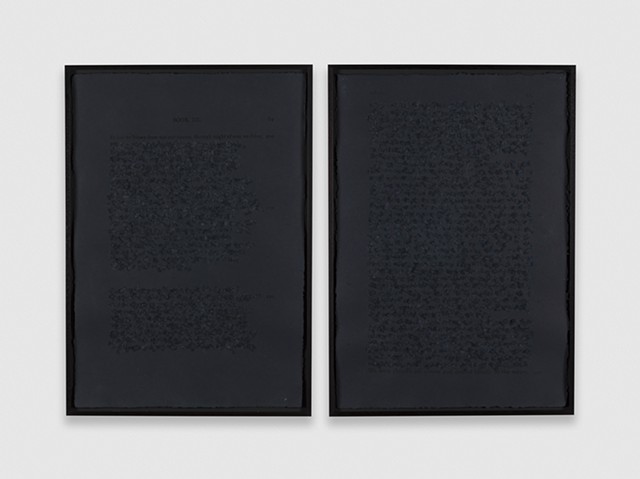
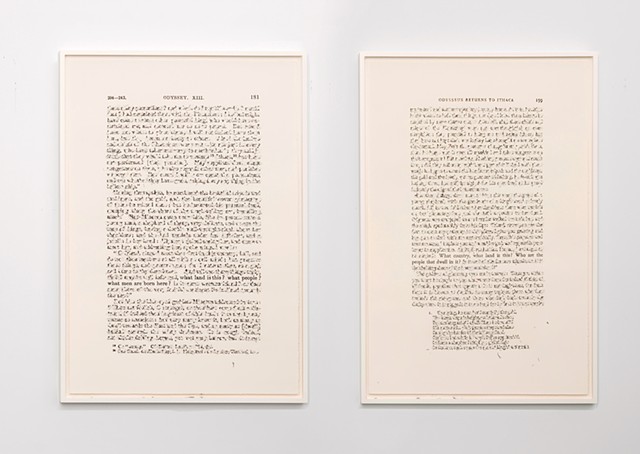
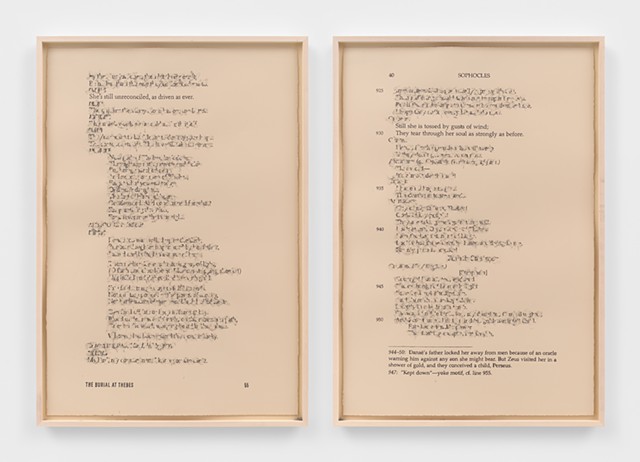
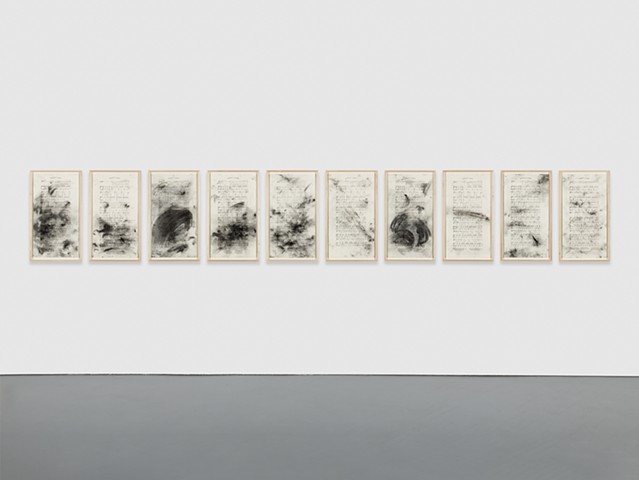
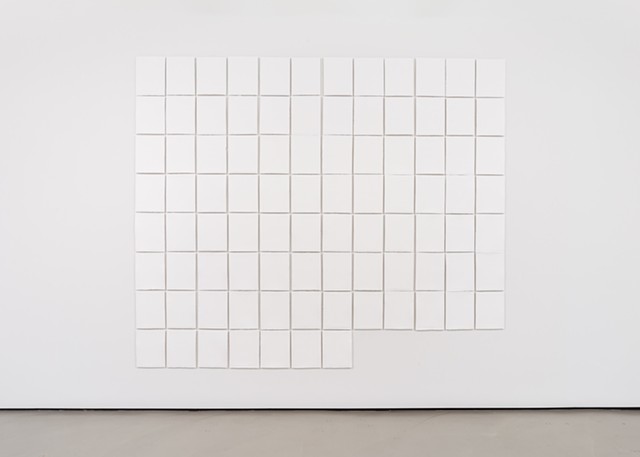
(White Noise series) "I'm Just So Politically Correct Today"
(White Noise series) "Maybe You Should Make It Into A Slaveship"
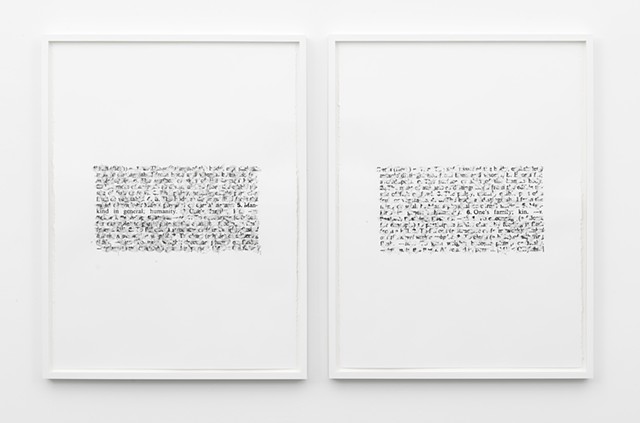
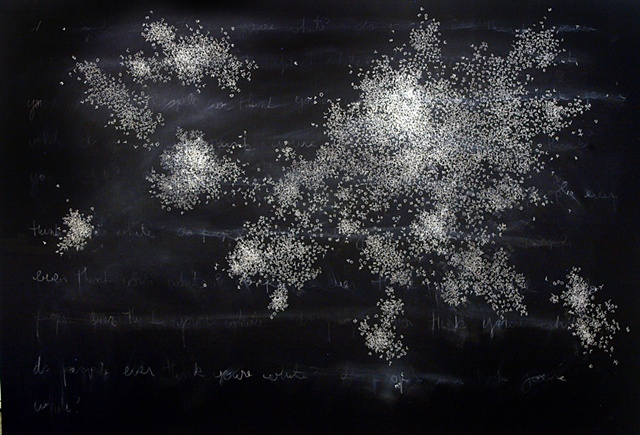
(White Noise series) "Do People Ever Think You're White? II"
(White Noise series) "It Was So Much More Intellectual Before You Told Me That"
(White Noise series) "Do People Ever Think You're White? I"
(White Noise series) "I Wish I Was Black"
(White Noise series) "I Mean, Obama Is President Now, So..."
(White Noise series) "Can I Touch Your Hair?" Untitled I
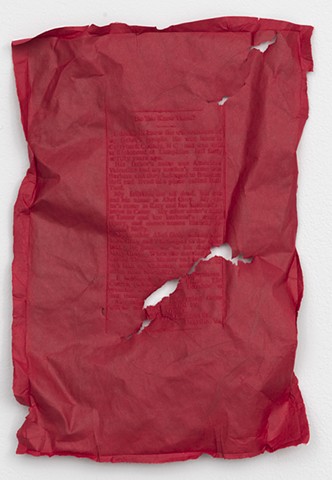
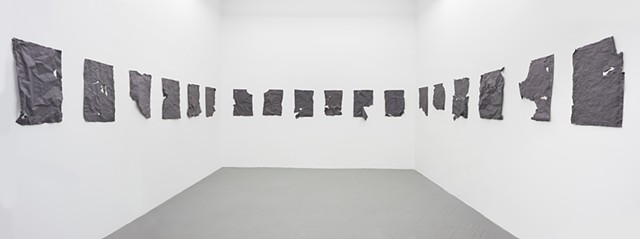
(Paper Bag Series) Untitled IV 
(Paper Bag series) Prove It Untitled III
(Paper Bag series) Brown Untitled V 
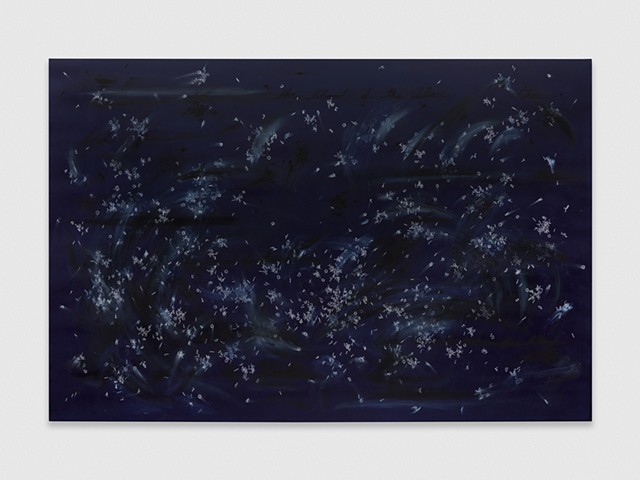
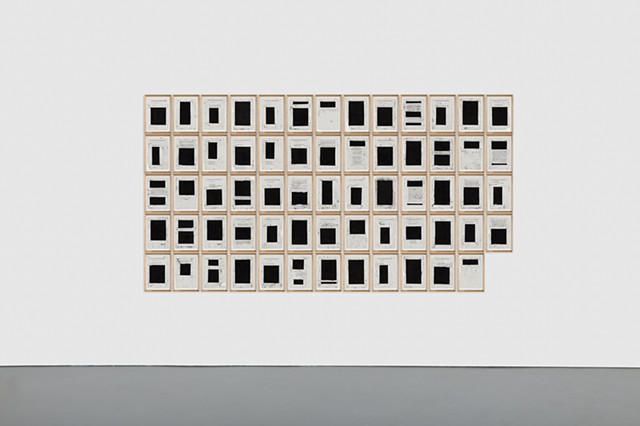
(Paper Bag series) Untitled The Traceable Amount 2:1 Untitled (Why Don't You Cook for Me More?) That's Just Her Blackness Coming Out Untitled (AP Mama) Untitled Untitled (Yelling Match) Untitled (In the Kitchen) Untitled (The Store) Untitled (Selma/Uniontown, AL) Education 2% 1964 Porch Talk Untitled Untitled Revisiting Catlett in Gadsden, Alabama Drawing II (Me Three) Around the Corner: Flipping William Christenberry He Could Fix Anything Nope, Just Freckles Gradient (Threads IV) Count Me Black, 2010

From Montgomery, AL
Lives & works in Atlanta, GA


Artist Statement:

I am interested in the unnerving possibility of multiple meanings, dual perceptions, and limitlessness in the seemingly binary. Drawing objects repeatedly allows me to fully understand the object in space, while defining and redefining my own racial landscape.

Racial identity, for me, has neither been instantly formed nor conjured in isolation. Rather, identity entangles memory: actual and revisited, cultural and historical, individual and collective. Through the dissolution of dichotomies and the combination of objects, this work recalls for me moments in the formation of my racial identity as Black and Biracial. And each re-worked mark is another attempt to navigate the binary paradigm of race in the U.S. South by grasping invisible limitations and grounding myself within the collective African American visual narrative.

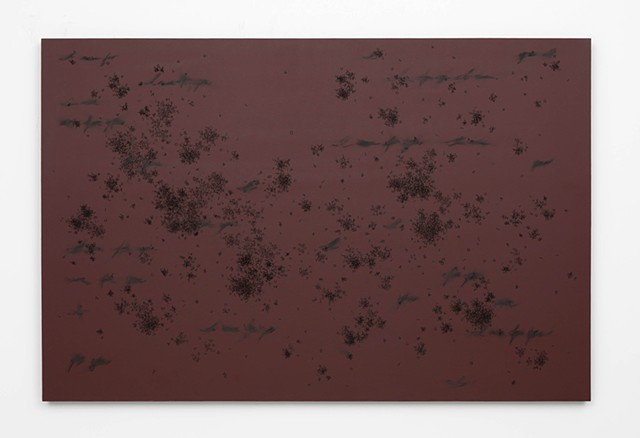
Whether black paper drawings, chalkboard erasures or layered vellum paintings, my work continues to evoke a longing for what author Rebecca Walker refers to as "the black outline around my body that everyone else seems to have.”